
Organizations invest heavily in employee benefits—health plans, wellness programs, financial tools, and more. Yet despite this investment, many employees don’t fully engage with what’s available.
Benefits go unused. Programs see low participation. Valuable resources are overlooked.
The issue isn’t always the quality of the benefits—it’s the experience around them.
At Touchpoints, we’ve seen that when benefits are designed as an experience—not just a list of offerings—employees are far more likely to understand, engage, and take action. The goal isn’t just to offer benefits. It’s to make them usable.
The Gap Between Offering and Usage
Most benefits programs are built to be comprehensive and competitive. But employees don’t evaluate benefits based on what’s offered—they evaluate them based on how easy they are to understand and use.
This gap leads to:
- Low utilization of valuable programs
- Confusion about how benefits work
- Missed opportunities for support
- Perception that benefits lack value
When employees don’t engage, even the best benefits fail to deliver results.
Why Benefits Go Unused
Employees rarely ignore benefits intentionally. In most cases, they simply don’t have the clarity or support they need.
Common barriers include:
- Lack of awareness — employees don’t know what’s available
- Complexity — information is difficult to understand
- Inconvenience — access requires too much effort
- Poor timing — information isn’t available when it’s needed
- Limited reinforcement — messages are delivered once and forgotten
Without addressing these barriers, utilization remains low.
What a Great Benefits Experience Looks Like
A strong benefits experience is simple, relevant, and easy to navigate.
Employees should be able to:
- Quickly understand what’s available
- See how it applies to their lives
- Access resources without friction
- Take action with confidence
When these elements are in place, benefits become something employees rely on—not something they overlook.
The Three Pillars of a Usable Benefits Experience
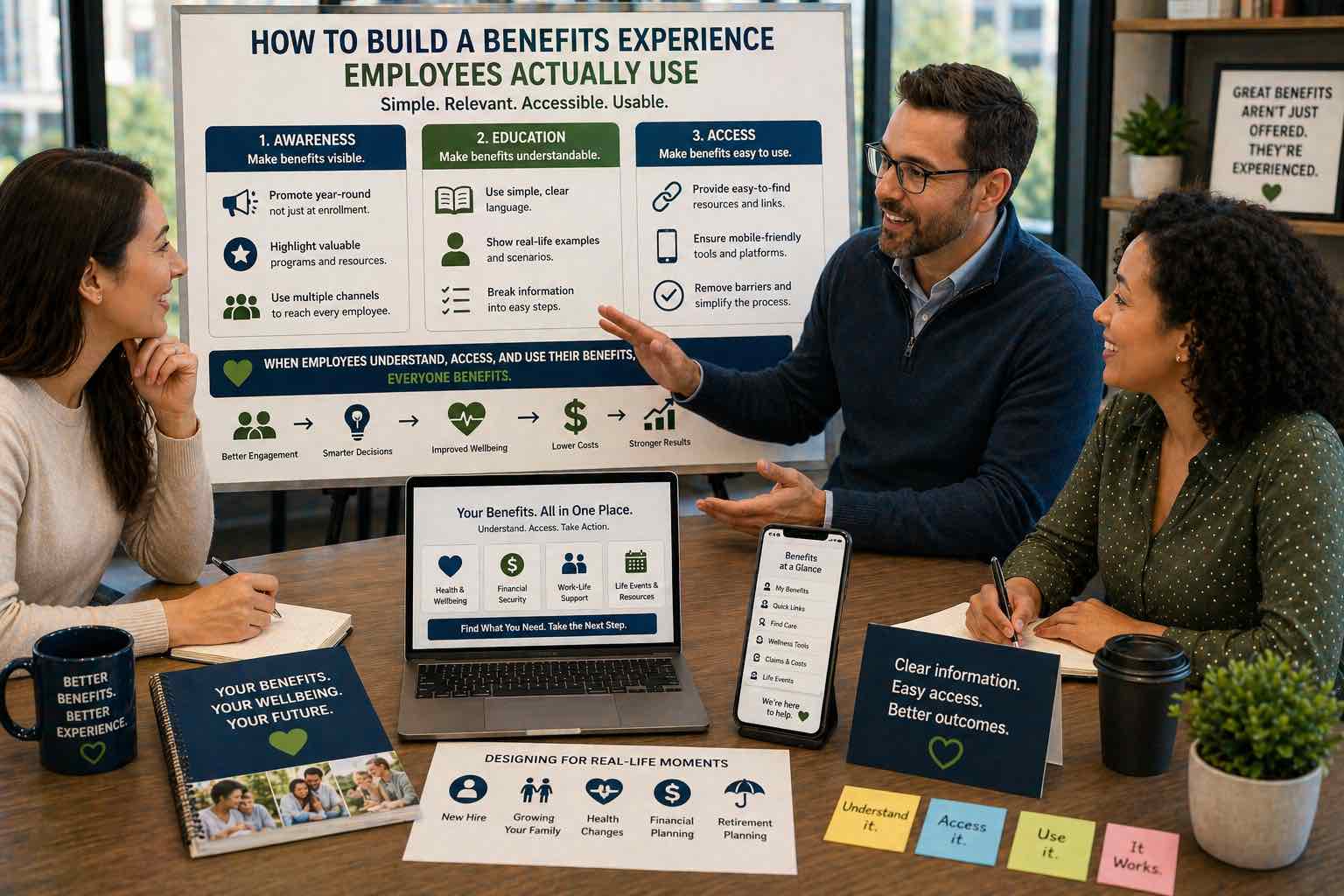
To build a benefits experience employees actually use, organizations should focus on three core areas: awareness, education, and access.
1. Awareness: Make Benefits Visible
Employees can’t use what they don’t know exists.
- Promote benefits regularly—not just during enrollment
- Highlight underutilized programs
- Use multiple channels to increase visibility
Awareness ensures benefits are top of mind.
2. Education: Make Benefits Understandable
Understanding drives engagement.
- Use simple, clear language
- Break information into manageable pieces
- Provide real-life examples and scenarios
Education turns confusion into confidence.
3. Access: Make Benefits Easy to Use
Even informed employees won’t act if access is difficult.
- Provide direct links and clear instructions
- Ensure mobile-friendly platforms
- Eliminate unnecessary steps and barriers
Access turns intent into action.
Designing for Real-Life Moments
Benefits are most valuable when they align with real-life situations.
Instead of presenting benefits as static information, connect them to moments that matter:
- New hires onboarding
- Family changes
- Health concerns
- Financial planning periods
When communication is tied to these moments, it becomes more relevant and actionable.
The Role of Consistency and Timing
A one-time message isn’t enough to create engagement.
To build a true benefits experience, communication must be:
- Consistent — reinforcing key messages over time
- Well-timed — delivered when employees are most likely to act
This ongoing approach keeps benefits visible, understandable, and accessible throughout the year.
Making the Experience Personal
Employees are more likely to engage when communication feels relevant to them.
Personalization can include:
- Tailored messaging by role or location
- Content aligned with life stages or needs
- Targeted reminders based on behavior
When benefits feel personal, they feel valuable.
The Impact of a Better Benefits Experience
When benefits are designed around the employee experience, the results are clear:
- Higher participation and utilization
- Improved employee satisfaction and engagement
- Better decision-making
- Reduced healthcare and benefits costs
- Stronger return on investment
Benefits shift from being an expense to being an advantage.
From Programs to Experience
Most organizations already have strong benefits programs. The opportunity lies in how those programs are delivered.
By focusing on:
- Visibility
- Clarity
- Accessibility
You can transform benefits from a static offering into a dynamic experience.
Your Path Forward
If employees aren’t using your benefits, the solution isn’t necessarily to add more—it’s to improve how they’re experienced.
At Touchpoints, we help organizations design communication strategies that connect employees to the value of their benefits—ensuring they understand, access, and use what’s available.
Conclusion
A benefits program only delivers value when employees use it.
By building an experience that is clear, relevant, and easy to navigate, organizations can unlock the full potential of their investment.
Because in the end, benefits aren’t defined by what you offer—they’re defined by how effectively your employees use them.