
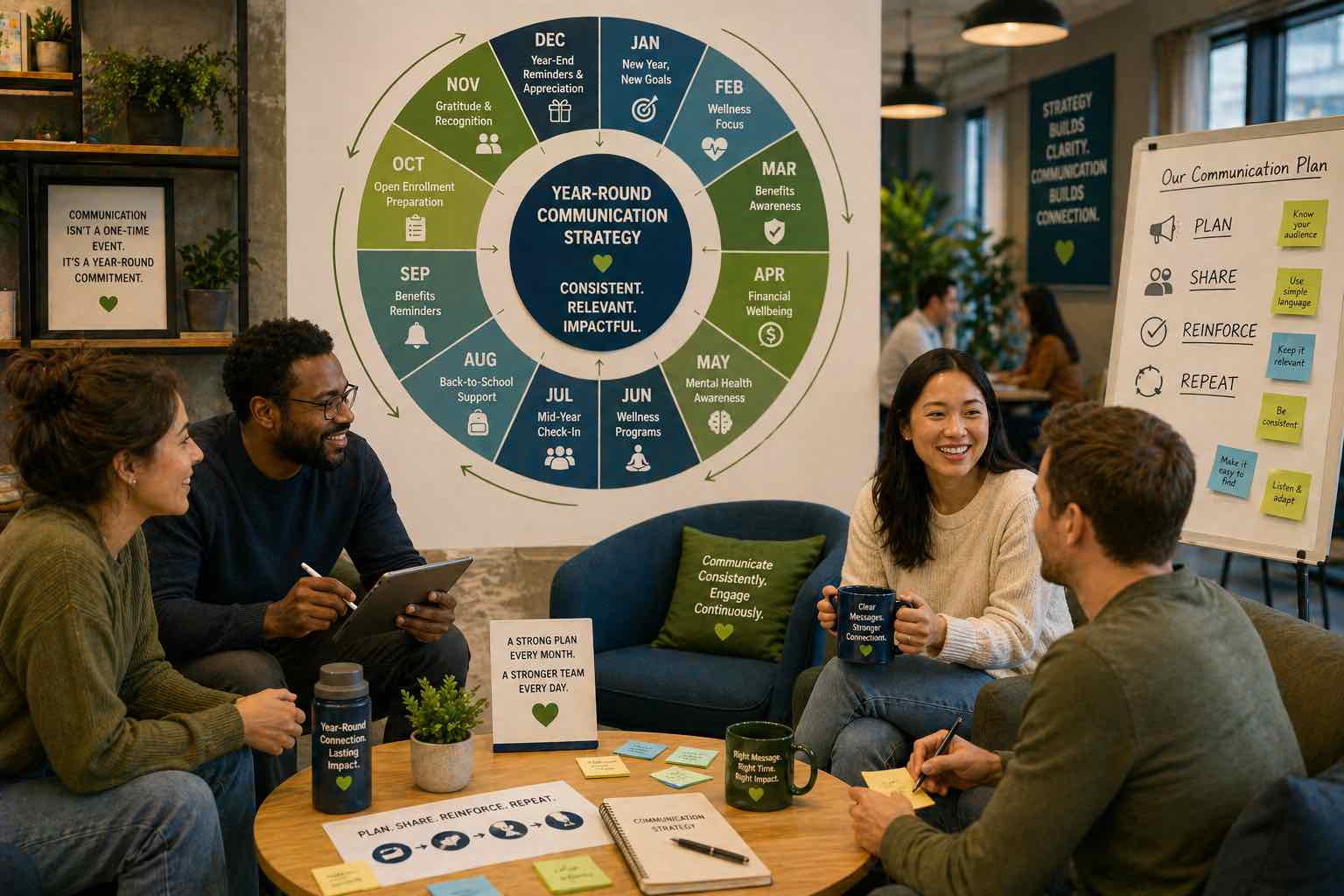
For many organizations, communication happens in bursts.
A push during open enrollment. A flurry of updates around major initiatives. A few reminders tied to deadlines. Then… silence.
While these moments are important, they aren’t enough.
Employees don’t make decisions once a year—and they don’t retain information from a single message. Without consistent, ongoing communication, even the most valuable programs go underused and misunderstood.
At Touchpoints, we’ve seen that the organizations that drive real engagement and results don’t communicate occasionally—they communicate continuously. A year-round communication strategy ensures employees stay informed, confident, and ready to act when it matters most.
The Problem with One-Time Communication
Many organizations treat communication as an event instead of a system.
This often leads to:
- Information overload during key periods like open enrollment
- Low retention of important details over time
- Missed opportunities to influence behavior throughout the year
- Underutilized programs that employees forget about
When communication is limited to specific moments, engagement becomes inconsistent—and so do results.
Why Year-Round Communication Matters
Employees make decisions about their health, finances, and work every day.
A year-round approach ensures they:
- Know what’s available to them
- Understand how to use it
- Receive reminders at the right time
- Stay connected to organizational priorities
Instead of reacting in isolated moments, employees are supported continuously.
What a Year-Round Strategy Looks Like
A successful communication strategy isn’t about sending more messages—it’s about sending the right messages at the right time, in the right way.
It’s built on three core principles: clarity, consistency, and cadence.
Clarity: Make Every Message Count
Each communication should be simple, focused, and actionable.
- Use plain language
- Highlight key takeaways
- Provide clear next steps
Clarity ensures employees can quickly understand and act.
Consistency: Reinforce Over Time
Repetition is essential for retention.
- Reinforce key messages across channels
- Maintain a unified tone and voice
- Repeat important information throughout the year
Consistency keeps information top of mind.
Cadence: Create a Rhythm
A steady flow of communication prevents both overload and silence.
- Avoid long gaps between messages
- Space communication appropriately
- Align messaging with key moments
Cadence builds familiarity and trust.
Key Components of a Year-Round Strategy
To make communication effective throughout the year, organizations should structure messaging around key themes and moments.
Plan Around the Calendar
Map communication to important dates and events:
- Open enrollment
- Preventive care reminders
- Wellness program milestones
- Organizational updates
Planning ensures communication is proactive, not reactive.
Focus on Monthly or Ongoing Themes
Instead of trying to cover everything at once, break communication into manageable pieces.
- Highlight one benefit or topic at a time
- Provide focused, digestible content
- Reinforce themes over multiple touchpoints
This approach improves understanding and retention.
Use Multiple Channels
Different employees engage in different ways.
- Text or push notifications
- Internal platforms
- Video or visual content
Multi-channel communication increases reach and effectiveness.
Make It Relevant
Tie communication to real-life situations.
- Health needs
- Financial planning
- Life events
Relevance captures attention and drives action.
Measure and Adjust
Track engagement to understand what works.
- Open rates and click-through rates
- Participation in programs
- Employee feedback
Use insights to refine your strategy over time.
The Impact of Year-Round Communication
When communication is consistent and ongoing, the results are measurable:
- Higher engagement across programs and initiatives
- Improved understanding of benefits and resources
- Better decision-making by employees
- Increased utilization of available programs
- Reduced costs through smarter behaviors
Communication becomes a continuous driver of value—not a periodic effort.
From Events to Experience
The most effective organizations don’t treat communication as a series of events—they treat it as an ongoing experience.
Employees:
- Hear messages more than once
- Receive information when it’s relevant
- Build familiarity and confidence over time
This experience leads to stronger engagement and better outcomes.
Your Path Forward
If your communication is concentrated around a few key moments, it may be time to rethink your approach.
At Touchpoints, we help organizations design year-round communication strategies that keep employees informed, engaged, and empowered—ensuring every message contributes to better understanding and action.
Conclusion
Communication shouldn’t start and stop—it should continue.
A year-round strategy ensures employees always have the information they need, when they need it.
Because in the end, engagement isn’t built in a single moment—it’s built over time through consistent, clear, and well-timed communication.