
Organizations invest heavily in employee benefits—health plans, wellness programs, financial tools, and more. Yet despite these investments, many employees remain disengaged, underutilize what’s available, or feel their benefits don’t fully meet their needs.
The disconnect isn’t always about what’s being offered.
It’s about how those benefits are experienced.
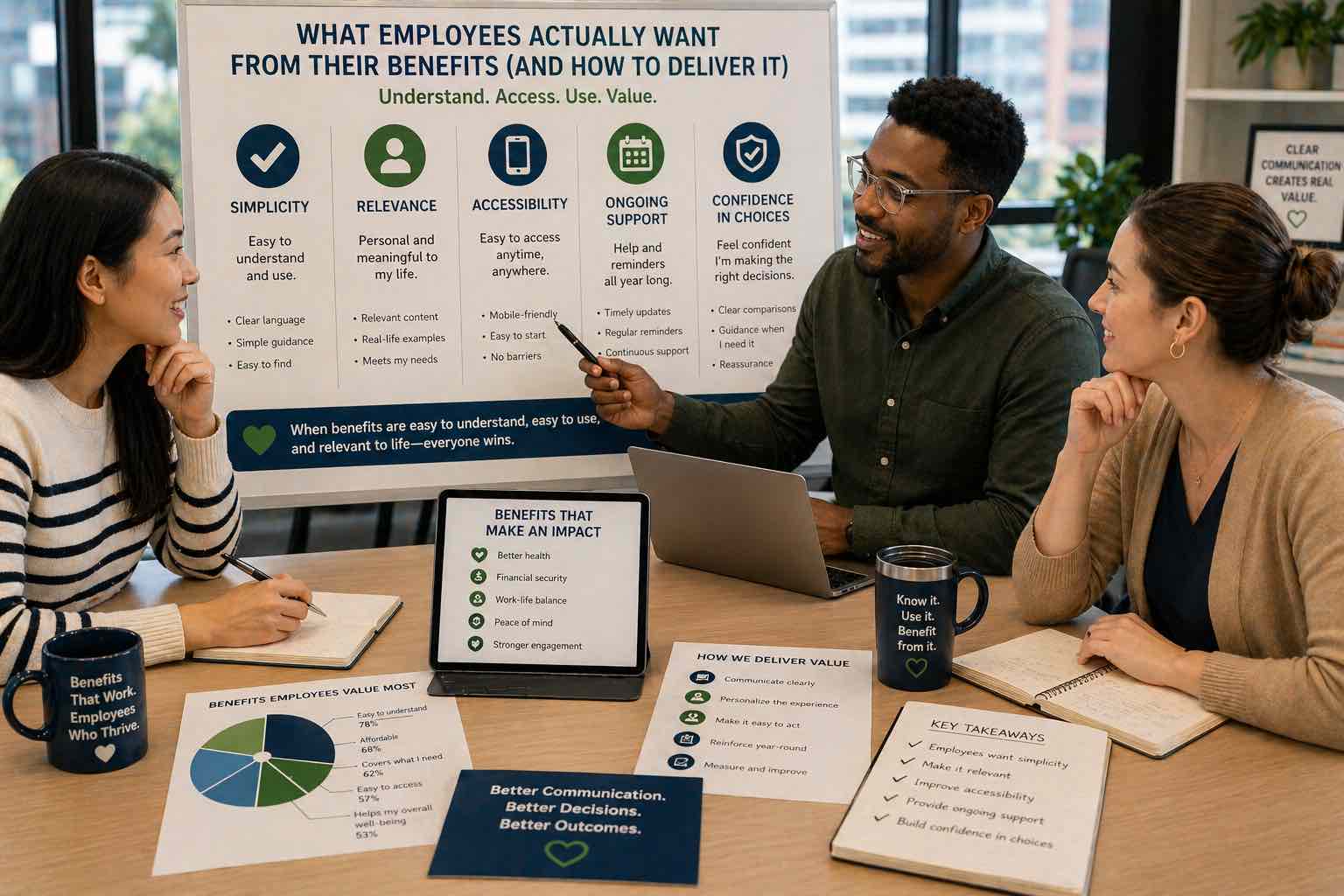
At Touchpoints, we’ve seen that employees don’t just want more benefits—they want benefits they understand, can easily use, and that feel relevant to their lives. When organizations align their strategy around these expectations, benefits shift from a passive offering to a meaningful advantage.
The Gap Between Offering and Experience
Most benefits packages are built with good intentions. They’re designed to be competitive, comprehensive, and supportive.
But employees often experience them differently.
This gap shows up as:
- Low participation in programs
- Confusion about how benefits work
- Missed opportunities for support
- Perception that benefits lack value
When employees don’t engage, even the best benefits fail to deliver results.
What Employees Really Want
While every workforce is different, consistent patterns emerge when employees are asked what matters most.
1. Simplicity
Employees want benefits that are easy to understand.
Complex terminology, dense documents, and unclear instructions create frustration and hesitation.
What employees need:
- Clear, straightforward explanations
- Simple guidance on how to use benefits
- Information that’s easy to find and digest
Simplicity builds confidence—and confidence drives action.
2. Relevance
Employees want benefits that feel personal and applicable to their lives.
Generic messaging and one-size-fits-all communication often miss the mark.
What employees need:
- Information tailored to their situation
- Examples that reflect real-life needs
- Messaging that connects benefits to everyday challenges
Relevance makes benefits meaningful.
3. Accessibility
Employees want benefits that are easy to access and use.
Even valuable programs can go unused if they’re difficult to navigate.
What employees need:
- Mobile-friendly access
- Clear steps to get started
- Minimal barriers to participation
Ease of use drives utilization.
4. Ongoing Support
Employees don’t want to hear about benefits just once a year.
They need reminders, guidance, and reinforcement throughout the year.
What employees need:
- Timely communication tied to real-life events
- Regular updates and reminders
- Continuous education, not one-time explanations
Ongoing support keeps benefits top of mind.
5. Confidence in Their Choices
Ultimately, employees want to feel confident they’re making the right decisions.
Uncertainty leads to inaction—or costly mistakes.
What employees need:
- Clear comparisons and decision support
- Guidance on when and how to use benefits
- Reassurance that they’re choosing wisely
Confidence leads to better outcomes.
Why These Needs Are Often Missed
Organizations often focus on expanding offerings rather than improving understanding.
Common challenges include:
- Overly complex communication
- Limited personalization
- One-time messaging during enrollment
- Fragmented access across multiple platforms
Without a clear communication strategy, even strong benefits fail to meet employee expectations.
How to Deliver What Employees Want
Meeting employee expectations doesn’t require more benefits—it requires better communication.
Build Awareness
Ensure employees know what’s available to them.
- Highlight key benefits regularly
- Promote underutilized programs
- Increase visibility across multiple channels
Employees can’t value what they don’t see.
Simplify Education
Make benefits easy to understand.
- Use plain language
- Break information into manageable pieces
- Provide real-life examples
Clarity turns confusion into confidence.
Personalize Communication
Tailor messaging to different audiences.
- Segment by role, location, or life stage
- Deliver relevant content at the right time
- Focus on what matters to each group
Personalization increases engagement.
Improve Access
Make it easy for employees to take action.
- Provide direct links and clear instructions
- Ensure mobile-friendly platforms
- Remove unnecessary steps
Convenience drives usage.
Reinforce Year-Round
Keep benefits top of mind through consistent communication.
- Send reminders tied to key moments
- Reinforce important messages over time
- Maintain a steady cadence
Repetition ensures retention.
The Impact of Getting It Right
When benefits are aligned with what employees actually want, the results are measurable.
- Higher engagement and participation
- Better utilization of programs and resources
- Improved employee satisfaction and retention
- Smarter decision-making
- Stronger return on benefits investment
Benefits become something employees rely on—not something they overlook.
From Offering to Experience
The most successful organizations don’t just offer benefits—they design the experience around them.
They focus on:
- Making benefits easy to understand
- Connecting them to real employee needs
- Delivering them in a way that’s accessible and ongoing
This approach transforms benefits from a static program into a dynamic part of the employee experience.
Your Path Forward
If employees aren’t engaging with your benefits, the issue may not be what you offer—it may be how it’s delivered.
At Touchpoints, we help organizations create communication strategies that connect employees to the value of their benefits—ensuring they understand, use, and appreciate what’s available to them.
Conclusion
Employees don’t just want benefits—they want benefits that work for them.
When communication is clear, relevant, accessible, and consistent, employees gain the confidence to make better decisions and fully engage with what’s offered.
Because in the end, the value of your benefits isn’t defined by what you provide—it’s defined by how your employees experience and use them.