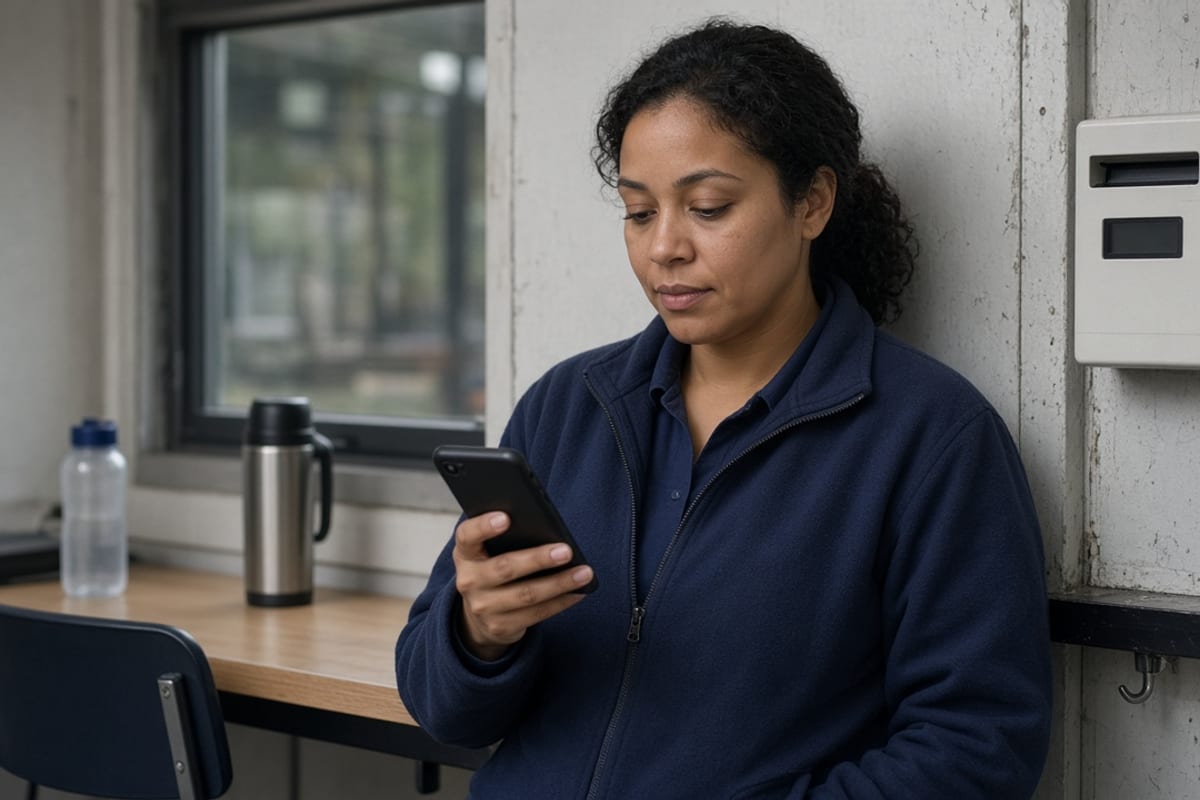
A connected workforce doesn't happen by accident. It's built — message by message — through a steady, intentional flow of communication that reaches every employee, wherever they are.
Today's workforce is more distributed than ever. People work from offices, kitchen tables, factory floors, and the road. When communication is designed for only one of those realities, the rest get left out — and disconnection sets in. The result is a workforce that feels fragmented, uninformed, and disengaged.
The good news: the same gaps that create disconnection can be closed deliberately.
Where connection breaks down
Communication gaps rarely come from a lack of effort. They come from structure — the channels, timing, and reach that determine whether a message actually lands.
- Channel gaps. Email-only strategies miss deskless and frontline workers entirely.
- Timing gaps. Bursts of communication at enrollment, then long silence, leave people guessing the rest of the year.
- Relevance gaps. Generic messages to everyone feel like noise and get tuned out.
- Feedback gaps. When communication only flows one way, employees stop feeling like part of the conversation.
Connection is a byproduct of consistency. People feel part of something when the information keeps showing up — clear, relevant, and reliable.
The building blocks of a connected workforce
Organizations that feel connected share a common trait: communication is treated as an always-on system, not a series of announcements. That system has a few essential ingredients.
Reach everyone, everywhere
Use a mix of channels — text, email, Microsoft Teams, mobile, and portal — so the message reaches office staff, remote employees, deskless workers, and their families alike. This is the foundation of what we call Reach Equity: every person has a fair chance to receive and act on the information that affects them.
Keep a steady rhythm
Consistency builds trust. A predictable cadence of relevant communication keeps employees informed and signals that the organization is paying attention all year, not just at renewal.
Make it relevant
Targeted, plain-language messaging respects people's time and attention. When communication feels useful, it gets read — and reading is the first step toward engagement.
Audit your reach before you add channels
The instinct when communication isn't landing is to send more of it. That usually makes things worse. Before adding volume, find out who is actually reachable today — the answer is almost always less flattering than the org chart suggests.
Segment your population and ask a blunt question of each group: if we sent something important right now, what percentage would see it within 48 hours?
- Office and hybrid staff. Company email works. This group is usually over-served.
- Fully remote employees. Reachable by email, but easy to miss context and hallway information.
- Deskless and frontline workers. Often no company email, no intranet access, and no time to check either. Frequently the largest group and the least reachable.
- Shift workers on nights and weekends. Present for none of the live sessions, and past the deadline by the time they hear about it.
- Spouses and dependents. Make many of the household's healthcare decisions and receive nothing at all.
Once that table exists, the priorities become obvious and unarguable. A program reaching 55% of the workforce doesn't need a better newsletter; it needs channels that work for the other 45%. We call closing that gap Reach Equity, and the population it usually hinges on is deskless and frontline employees.
Match the channel to the message
Multi-channel doesn't mean broadcasting everything everywhere. Sending every message on every channel trains people to ignore all of them. Each channel has a job:
- Text/SMS — time-sensitive and action-required: enrollment deadlines, last-chance reminders, urgent changes. High reach, so spend it carefully. Getting SMS right depends more on restraint than on copywriting.
- Email — explanation and detail for employees who have and read it. Good for context, poor for urgency.
- Teams or Slack — in-the-flow nudges and quick answers for desk-based staff.
- Mobile-accessible site — the always-available reference layer, with no login required so it works for family members too.
- Print and on-site — still the most reliable way to reach a break room or a plant floor.
The rule of thumb: one message, one primary channel, one action — with a durable place people can go to find it again later.
Build a rhythm people can predict
Consistency does something no single well-written message can: it changes expectations. When employees learn that useful, short, relevant information arrives on a predictable schedule, they start opening it by default. When communication arrives in unpredictable floods, they learn to triage it away.
A sustainable cadence for most organizations looks like a brief monthly touchpoint on one topic, a seasonal push around open enrollment, and event-triggered messages for new hires, life changes, and plan updates. That's roughly 15 to 20 deliberate touchpoints a year — enough to build the habit, few enough that HR can actually sustain it and each one can earn its place.
Let it flow both ways
Feedback gaps are the quietest failure on the list because nothing visibly breaks. But one-way communication has a real cost: you never learn what's confusing until it shows up as low utilization or a spike in HR tickets.
The lightest useful version is a single question attached to communication people already receive — "Was this helpful?" or "What's still unclear about your benefits?" — plus a genuine look at what employees ask HR most often. Those questions are a free content roadmap; the top five are almost always the topics your next five messages should cover. Ignoring that signal is how organizations end up with employees who feel unheard despite a busy communication calendar.
Key takeaways
- Disconnection usually comes from structural gaps in channel, timing, relevance, and feedback.
- Audit who is actually reachable by segment before adding more communication volume.
- A connected workforce treats communication as an always-on system, not announcements.
- Multi-channel reach ensures no one — office, remote, or deskless — is left out.
- Give each channel one job; broadcasting everything everywhere trains people to ignore you.
- A predictable rhythm of 15–20 deliberate touchpoints a year beats unpredictable floods.
- Consistency and relevance are what turn information into engagement.
Connection you can measure
The best part of building communication as a system is that you can see it working. Engagement data shows who's reading, who's acting, and where gaps remain — so you can keep closing them. A connected workforce isn't a soft goal; it's a measurable outcome of communication done right.
Track reach by segment as your headline number, because it's the one that exposes structural exclusion rather than flattering you with an average. Then layer on the behaviors that matter — utilization of programs you promoted, enrollment completed without HR intervention, questions resolved without a ticket. Our guide to measuring communication ROI covers how to connect those numbers to dollars leadership recognizes.
Frequently asked questions
What is a connected workforce?
A workforce where every employee — office, remote, deskless, and their families — reliably receives, understands, and can act on the information that affects them. It's the product of an always-on communication system with deliberate channels, a predictable rhythm, and two-way feedback, not a series of announcements.
How do you improve internal communication in a distributed workforce?
Start by auditing reach: segment your population and determine what percentage of each group would actually see an important message within 48 hours. Fix structural exclusion first — usually deskless staff, shift workers, and dependents — with mobile-first channels, then establish a predictable cadence rather than increasing volume.
Which channels should we use for employee communication?
Give each channel one job. Use text/SMS for time-sensitive actions, email for explanation and detail, Teams or Slack for in-the-flow nudges to desk staff, a no-login mobile site as the always-available reference, and print or on-site signage for break rooms and plant floors. Sending every message on every channel trains people to ignore all of them.
How often should you communicate with employees?
A sustainable pattern for most organizations is a short monthly touchpoint on one topic, a seasonal push around open enrollment, and event-triggered messages for new hires and life changes — roughly 15 to 20 deliberate touchpoints a year. That's frequent enough to build a reading habit and few enough that HR can sustain it.
See how Reach Equity connects every employee — no firewall, no friction, no one left out.

Kate transforms complex ideas into clear, actionable employee communications that drive behavior change, leading projects from strategy through production. A Texas A&M communications graduate and IABC member.