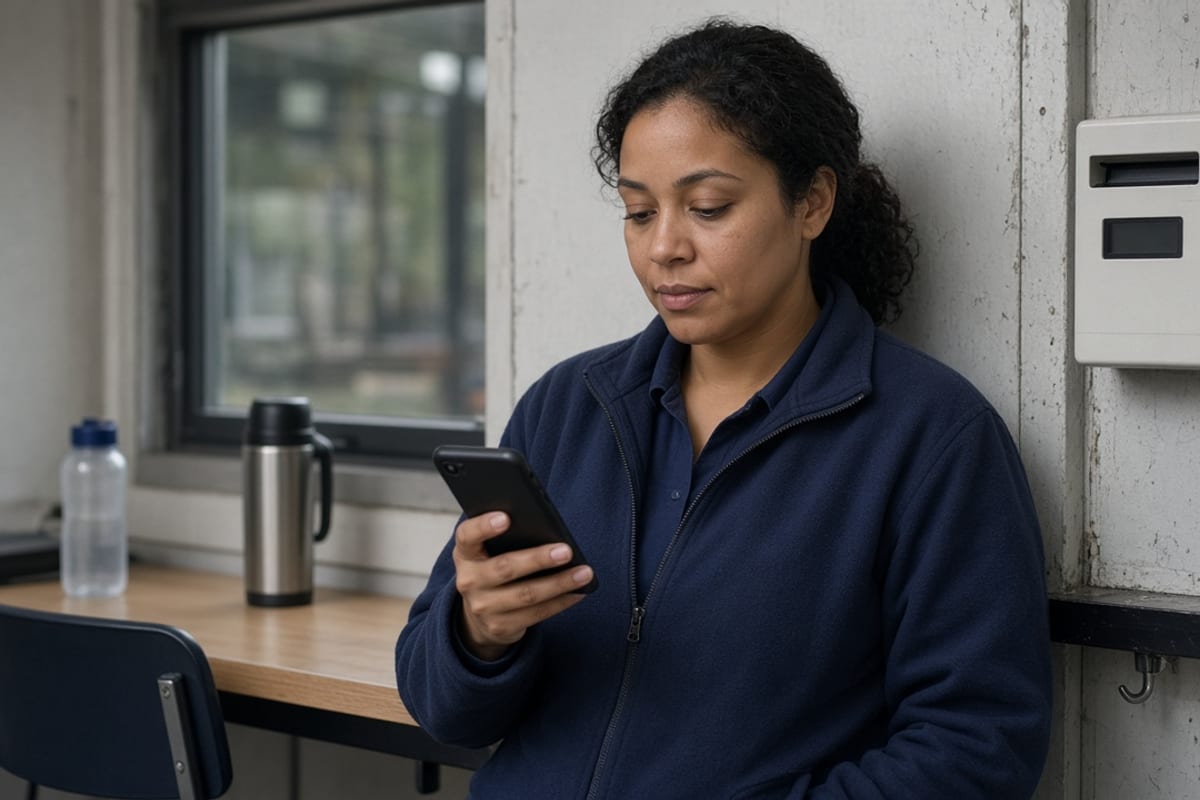
Roughly 80% of the global workforce is deskless — yet most benefits communication is built for the 20% who sit at a computer. If your strategy starts and ends with email, you're leaving the majority of your people behind.
Communicating benefits to deskless employees — frontline, field, shift, and remote workers — requires a different approach. They don't check a company inbox, rarely log into an intranet, and often learn about benefits only when something goes wrong. Here's how to reach them effectively.
Why traditional channels fail frontline workers
The default tools of HR communication were designed for desk-based employees:
- Company email — many frontline workers don't have one, or never check it.
- Intranets and portals — require a login and a reason to visit, which deskless workers rarely have.
- Break-room posters — easy to ignore and impossible to measure.
The result is a quiet inequity: the people who often need their benefits most are the least likely to hear about them.
If a benefit only reaches employees at a desk, it isn't really a benefit for your frontline — it's a missed promise.
Meet people where they already are
Deskless employees almost universally have one thing: a personal mobile phone. That makes mobile-first, multi-channel communication the key to reaching them.
Text / SMS
Text messages see open rates above 90% and are read within minutes. For time-sensitive reminders — enrollment deadlines, wellness events, preventive care nudges — nothing beats SMS for the frontline.
Mobile web app (no login friction)
A mobile web app employees can reach without a corporate account lets frontline workers — and their spouses and dependents — view benefits anytime, from anywhere. No firewall, no VPN, no forgotten password.
The right mix
Layer SMS and mobile with Microsoft Teams and email for hybrid teams, so each person is reached on a channel that fits how they actually work. An enrollment that only uses the work inbox is the failure mode in why email-only open enrollment fails frontline teams.
The Reach Equity™ framework
We call the goal Reach Equity: every employee — regardless of role, location, or device — has a fair chance to receive, understand, and act on their benefits. Achieving it means:
- Mapping which segments your current channels miss.
- Adding mobile-first channels (SMS, app) to close the gap.
- Including spouses and dependents who drive care decisions.
- Measuring reach by segment so no group stays invisible.
Starting when you have no contact data
The plan above assumes you can reach people. For most employers with large frontline populations, that is exactly what is missing — no personal email addresses, mobile numbers that are years out of date, and no documented consent to text anyone. This is the real starting point, and it takes a season to fix rather than a week.
Collect at moments people are already stopping to do something. Onboarding paperwork is the best of these because it is universal and already involves contact details. Open enrollment is the second, since employees are engaged and motivated. Any safety or compliance training that takes attendance is a third.
Where there is no paperwork to attach to, printed notices where people clock in or take breaks do the work: a keyword-and-shortcode opt-in produces consent and a verified number in a single action. Pair it with a reason that is immediately understandable — knowing about a deadline in time to act is something anyone can see the value of. Add a QR code for the benefits site so the same notice serves people who prefer to browse.
Two things to get right from the start. Make the opt-in explicit and separately worded rather than buried in a general acknowledgment, so you have a record you can point to. And never treat employment as consent by importing HRIS numbers — beyond the compliance exposure, an unexpected first message generates complaints and opt-outs that set the program back further than waiting would have. Adaptable copy for these notices is in our templates library.
The physical layer still matters
Digital-first is right, but for frontline populations the printed layer is not a fallback — it is frequently the highest-reach channel you have, and it is the one most likely to be dismissed as old-fashioned.
Placement beats design. A notice at a time clock, a break room table, a locker room, or an entrance is seen by nearly everyone on every shift. The same notice on a bulletin board in a corridor is seen by almost no one. Walk the sites and look for where people actually pause.
Keep the content to one message, one deadline, one QR code, and one named human with hours they are on site. That last element matters disproportionately: for employees who have never had a benefits conversation with anyone, a real person at a known time converts more elections than any digital campaign. Where shift patterns matter, our enrollment timeline shows where to place these relative to the window.
What changes when reach is fixed
Employers who close a frontline reach gap tend to be surprised by which numbers move, because the effects show up in places that were never framed as communication problems.
Enrollment completion rises and the deadline-day scramble shrinks. Emergency room utilization for minor complaints falls, because the population with the least schedule flexibility finally knows telehealth exists. EAP usage rises from near-zero. And the variance between locations — the gap that gets attributed to site culture or management quality — narrows sharply once the underlying difference in reach is removed.
That last observation is worth holding onto. When one facility's benefits numbers look nothing like another's, the explanation is far more often structural than cultural. Measuring reach by segment is what makes it visible, and our guide to measuring communication ROI covers how to attach dollars to the change.
Key takeaways
- Most of the workforce is deskless, but most communication targets desk workers.
- Email and intranets systematically exclude frontline employees.
- Text/SMS and a no-login mobile app reach people where they are.
- Reach Equity ensures every segment — and their dependents — is included and measured.
Frequently asked questions
How do you communicate benefits to deskless employees?
Reach them on the channels they already use — primarily text/SMS and a mobile web app that needs no corporate login. Avoid relying on company email or intranets, which most deskless and frontline workers rarely access.
Why is email a poor channel for frontline workers?
Many frontline and deskless employees don't have a company email address or rarely check one. Email-only strategies systematically exclude them, leaving a large share of the workforce uninformed.
What is Reach Equity?
Reach Equity is the principle that every employee — office, remote, deskless, and their dependents — has a fair chance to receive, understand, and act on benefits information, achieved through multi-channel, mobile-first communication with no firewall or friction.
Reach 100% of your workforce — not just the desks. See how LinQed Online delivers Reach Equity across every channel your people use.
Kate transforms complex ideas into clear, actionable employee communications that drive behavior change, leading projects from strategy through production. A Texas A&M communications graduate and IABC member.