An email-only benefits program reaches the people who live in an inbox. Everyone else hears rumors. Replacing it takes a sequence. Measure who would see an important message in 48 hours. Add SMS where you have consent, a page with no login, print, and a manager card. Keep email for the people who read it. Do not move every message to text. Text is for the note that has a date and one action.
The diagnosis is written in email-only open enrollment. The standard you are aiming at is Reach Equity. The text channel has its own rules in text message employee communication. Use all three. This post is the order of operations for the next quarter.
Measure the 48-hour test
Pick a message you would actually need people to see: a deadline, a network change, a deductible reset. Ask, by segment, what share would see it within 48 hours on the channels you have today. Be honest. "We have their work email" still leaves the 48-hour question open. Shared inboxes, turnover, night shifts, and personal devices change the answer.
Segment at least four ways if they exist in your workforce: headquarters, frontline sites, people without a company email, and households if the decision-maker is a spouse. Write the percentages you believe and the reason. This is a working estimate you will revise after the first real send. The segment with the worst 48-hour reach is the first project. A blended number will send you back to subject-line testing.
While you measure, list the contact fields you actually hold. Personal email. Mobile number. Consent flag for SMS. Preferred language. Site and shift. Missing fields are part of the result. You cannot text a number you do not have, and you should not text a number you have without consent. The first repair is often the collection step.
Add channels in an order
Keep email. It is the right channel for long readers and for people who asked for it. Stop using it as the only channel. Next, publish one no-login page that holds the facts you are tired of reattaching. The family guide, the enrollment dates, the nurse line. Link to it from every send. A page behind SSO recreates the email problem on a phone.
Add SMS for people who opt in. Use it for deadlines, plan changes, and the one action in a campaign. Point the text at the no-login page. Leave the SPD out of the text. Collect consent on paper at hire, at enrollment, and on a poster with a keyword, and store the yes separately from "we have a phone number in payroll." The text post covers the wording. Follow it.
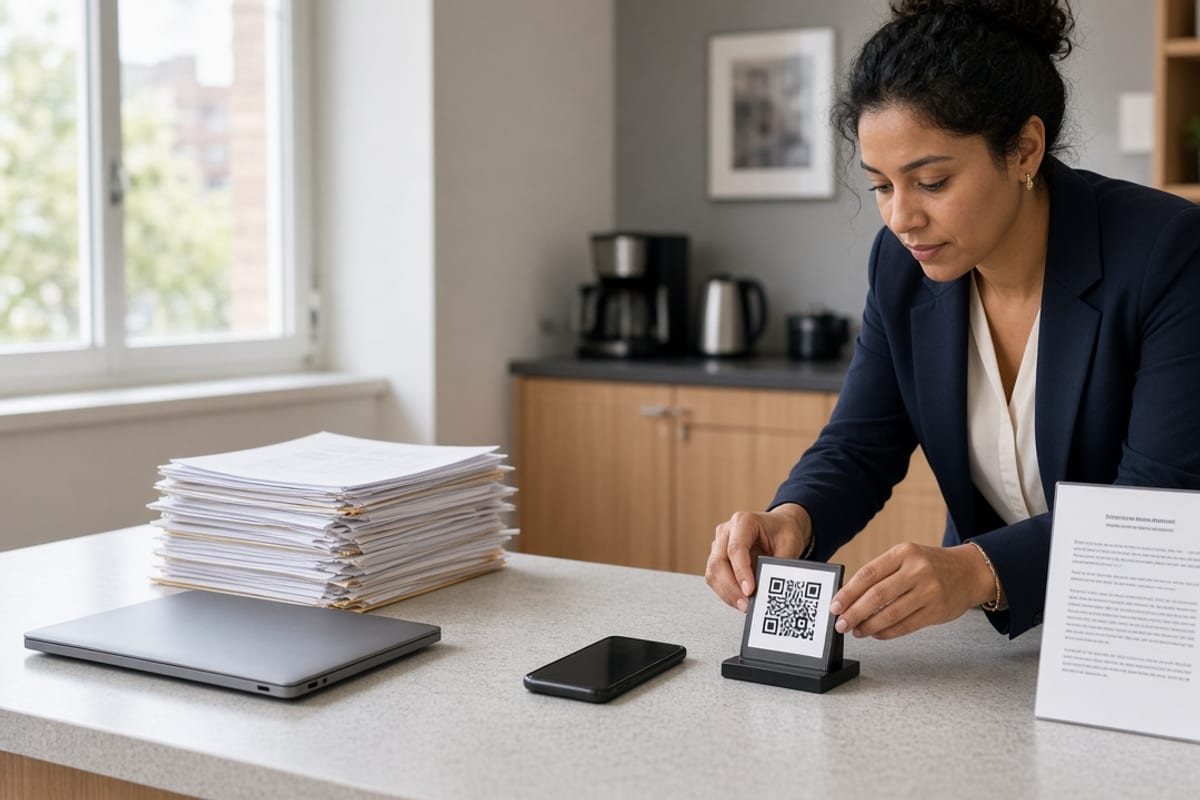
Add print where people stand still: time clocks, break rooms, locker rooms, dispatch windows. One message, one date, one QR code to the same page, one human's name. Add a manager card the week any required message goes out. Supervisors get three permitted sentences and the link. They are the channel for people who will ask a person before they will tap a message.
Do not flip the archive into texts. A monthly essay, a benefits fair recap, and a vendor spotlight can stay in email. If everything becomes a text, people opt out, and you lose the channel you needed for the deadline. The rule is simple: email can carry detail for readers; text carries a date; the page carries the facts; the manager card carries the handoff.
A 30-60-90 day order
Days 1 to 30: run the 48-hour estimate, fix the worst contact-field gap, and publish the no-login page for the next important topic. Brief managers with a card for that topic. Tell leadership the baseline in one paragraph. You are not launching a new brand. You are opening a door.
Days 31 to 60: turn on SMS for the opted-in group and send one real message about a date people need. Include print at the sites that failed the 48-hour test. Watch opt-outs and the questions that come back. Update the page so it matches the text word for word on the date and the action. Mismatched dates are how a new channel loses trust in a week.
Days 61 to 90: measure the 48-hour test again for the weak segment. Report reach and the action. Decide the next segment or the next language. Write the rule for what stays email-only. Put the cadence on a calendar so the program does not depend on the person who ran the pilot. If that person leaves, the page, the consent list, and the card template should still be there. That is the difference between a project and a replacement.
What you keep and what you retire
Keep the enrollment platform. People still elect benefits somewhere. Retire the habit of saying "it's in the email" when someone missed a deadline. The new sentence is "here is the page, here is the text for people who opted in, and here is the card your supervisor has." Train HR to say that sentence. The tools do not matter if the service team sends people back to an inbox they cannot open.
Retire all-staff emails as the proof that you communicated. Proof is the share of each segment that had a path, and the share that completed the action. Measuring communication ROI shows how to put that on one page. Increasing benefits engagement is what you do after people can actually see the message. Engagement tactics aimed at an inbox the floor never opens will keep missing.
At day 90, write what changed in plain language for the CFO page. Which segment can now see a message in 48 hours. Which segment still cannot, and the field you are collecting next. Email remains. It is no longer the program. Reach Equity™ is the program: a fair chance for every group, including the household, to get the note and act on it. LinQed Online can run the page, the SMS, and the calendar once you have decided the order. The order is the part you should not skip.
Key takeaways
- Start with a 48-hour reach estimate by segment. The worst segment is the first project.
- Keep email for people who read it. Add a no-login page, consented SMS, print, and manager cards.
- Text carries a date and one action. Do not move every message to SMS.
- Use a 30-60-90 order: measure and publish, send once for real, then measure again.
- Consent is separate from having a phone number in payroll.
- Proof is who had a path and who acted. Leave the all-staff open rate off that page.
Frequently asked questions
Should we turn off email?
No. Keep email for the people who use it and for longer notes. Add other paths so a deadline does not depend on one inbox. The failure was using email as the only path.
Can we upload HRIS mobile numbers and start texting?
Only with a consent you can point to. A number in payroll still needs a separate yes. Collect an explicit opt-in at hire, at enrollment, or from a poster keyword, and honor opt-outs. The first uninvited text will set the program back.
What goes on the no-login page first?
The next decision people must make: enrollment dates, a plan change, or where to go for care. One page, one action, phone numbers included. Expand later. A perfect library that requires a VPN is the old program with a new coat.
How do we know the replacement worked?
Run the 48-hour test again on the segment that was dark. Look at completion or the action you asked for. If the only number that moved is email opens, you have not replaced the program yet.
Measure who would see an important message in 48 hours, then add the channel that closes the largest gap.
Pairs strategic thinking with a drive to get it right every time. With 16+ years of experience — including a communication practice in Sydney, Australia — she specializes in simplifying complex benefit programs.