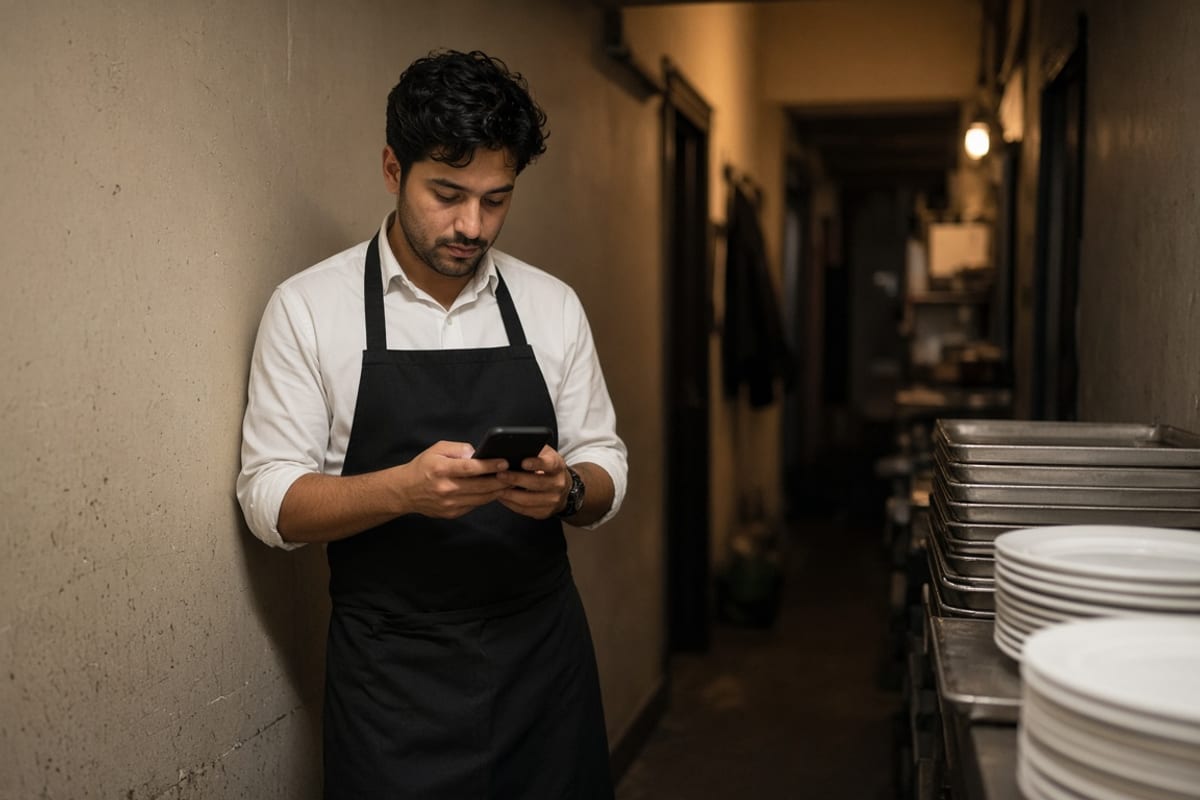
Retail and restaurant benefits messages fail when they assume a desk, a lunch hour, and an inbox someone checks. The crew on the floor gets a ten-minute break, a personal phone, and a manager who is often hourly too. The message that works is one fact, one date, one link that opens without a password, and a card the shift lead can read out loud. Anything longer waits in a headquarters draft while the enrollment window closes.
Plants and hospitals have their own patterns, covered in manufacturing shift communication and in hospital staffing notes. Stores and dining rooms are different. Turnover is faster, shifts split across a day, and the person who can explain the plan is often on a register or an expo line. Reach Equity™ here means the closer and the opener get the same chance to hear the date, not a forwarded email that arrived at 10 a.m.
Write for a ten-minute break
Cut the message to what someone can use before the next table or the next rush. One decision or one deadline. The date it matters. The place to do it. A phone number if the link fails. Save the plan comparison for a page they can open off the clock. The text, the poster, and the pre-shift huddle all carry the same four lines. If the lines do not match, the crew will follow the one they heard from the manager, and you will not know which version that was.
Use the words on the ID card and the pay stub. "Medical plan" is less useful than the network name they see at a clinic. "Enroll by Friday" is less useful than the calendar date and whether the deadline is the end of their shift or midnight in a time zone. Say whose shift. A Friday close at a restaurant is not a Friday at a corporate office. Schedule the huddle for a time the crew is actually on site, and run it twice if the store has a split between open and close.
Translate when a store's crew needs it, and put the same date and phone number in each language. A beautiful English poster next to a short Spanish text that forgot the deadline is how half the staff gets a different window. Staff the phone line with someone who can take the call in the language of the poster. The guide on multilingual benefits communication applies on a sales floor the same way it applies anywhere else: the decision, the date, and a human who can finish the sentence.
The manager is on the floor too
Shift leads in retail and restaurants do not have an hour to study a booklet. Give them a card the size of a phone screen. The date. The one action. The sentence to say if they do not know an answer: "I will get HR to call you," plus the number. Pay them for the five minutes the huddle takes, or run it inside a huddle you already pay for. An unpaid "quick benefits chat" after close will not happen on a Saturday night.
Tell leads what they must not invent. Eligibility for variable hours, a waiting period, and whether a spouse can join are questions with answers on the plan, not in a shift lead's memory. The card points to the page. The page has the answer you confirmed. This is the same discipline as manager talking points, shortened again for someone who will be interrupted mid-sentence by a guest.
New hires on a dining room floor often start on a Friday and hear about benefits on a Monday email they do not have. Put the one-page path in the first-day packet and in the scheduling app if you use one. Name the day their election window starts and ends, in dates, at the store. A 30-day window that exists only in a system the general manager can see will expire while the new hire is still learning the menu.
Personal phones and a page with no login
Work email is a weak channel for this workforce. Many people will not open it on a day off, and some do not have a company address they can reach from home. Use the channels you are allowed to use: a scheduling notification, a text to a personal number they opted into, a QR code on the break-room poster, and the huddle. Every one of those should land on a page that opens on a personal phone with no VPN and no single sign-on. Email-only enrollment already fails frontline teams. Stores and restaurants are where that failure is easiest to see, because the unanswered email has a face at the next pre-shift meeting.
Keep the page light. Network name, deadline, phone number, and a button to start enrollment or to ask for a call. A PDF of the booklet can be linked underneath for people who want it. The button is the task. Test it on a cheap phone over a store's guest wifi, or over cellular, because that is the network in the hallway. If the page takes twenty seconds to load beside a stack of plates, it will not be used.
For households, say whether a spouse can be on the call. Offer a time window for a callback that is not only weekday mornings. A closer who sleeps until noon cannot use a hotline that shuts at 4 p.m. Publish the hours in the store's time zone. Count callbacks you missed because the window was wrong, and move the window.
Proof by store or shift, not by headquarters opens
Report completion by store, by shift, or by role. A company-wide open rate hides the location that never got the huddle. Ask each general manager for three numbers after the window: how many eligible people were on the roster, how many finished, how many were reached only by the poster or the text. You will not get perfect data. You will see the store that needs a second pass.
Visit one store during the window if you can. Read the poster. Ask a shift lead to say the deadline without looking. Ask a crew member if they know where to enroll. The gaps you hear are the next edit. A headquarters dashboard that looks healthy while the poster in the hallway is last year's carrier is a familiar failure. The hallway is the audit.
When the window closes, send the same crews a one-line result they can use: cards arrive this week, questions go to this number, nothing else changes until the date you name. Silence after a loud enrollment week teaches the next cycle to ignore you. The follow-up is part of the message, and it has to fit on the same card.
Key takeaways
- Fit the message to a ten-minute break: one fact, one date, one link, one phone number.
- Run the huddle for openers and closers, on paid time, with a card the shift lead can say aloud.
- Land every channel on a page that opens on a personal phone without a work login.
- Put election dates in the first-day packet, not only in an email the new hire never sees.
- Report completion by store or shift, and check the hallway poster against this year's carrier.
- Close the loop with one line on when cards arrive and who to call.
Frequently asked questions
Is a store benefits message just a shorter version of the office email?
The facts must match, and the container should change. One date, one action, a page without a login, and a huddle for both halves of a split shift. The long comparison can live on the page for people who open it off the clock.
What do we give a shift lead?
A card with the date, the action, and the sentence to use when they do not know: they will have HR call, and here is the number. Leads should not guess eligibility or whether a spouse can join.
How do we reach people who do not read work email?
Use a channel they already touch: the scheduling tool, an opted-in text, a break-room QR code, and the pre-shift huddle. Every path should open on a personal phone with no VPN.
What should we measure?
Completion by store or shift, plus whether people were reached by the poster or the text. A company-wide email open rate hides the location that never ran the huddle. Check one hallway poster in person.
Write the message for a ten-minute break and a personal phone.
Pairs strategic thinking with a drive to get it right every time. With 16+ years of experience — including a communication practice in Sydney, Australia — she specializes in simplifying complex benefit programs.